1. What were the three aspects of the assignments I've submitted that I am most proud of?
I really loved doing our main lab. Really thinking about how big of a world with live in with so many different species.
2. What two aspects of my submitted assignments do I believe could have used some improvement? My other small lab demographic, and my ethical issue maybe taken offensively
3. What do I believe my overall grade should be for this unit? B range
4. How could I perform better in the next unit? there is no next unit!
At what moment during this unit did you feel most engaged with the course?
I love learning about fetal development, probably one of the most interesting parts of human Biology for me, aside for the bone structure.
At what moment unit did you feel most distanced from the course?
Biodiversity and ecology.
What action that anyone (teacher or student) took during this unit that find most affirming and helpful?
What action that anyone (teacher or student) took during this unit did you find most puzzling or confusing?
What about this unit surprised you the most? (This could be something about your own reactions to the course, something that someone did, or anything else that occurs to you.)
I was shocked with our main lab that I was able to find 30 different species, plus there are sooo many more not included. Until you really think about it, it seems like it would be difficult to find even 20 different species you encounter. Great lab!
Monday, May 12, 2008

Ethical Essay
Although I do think that there is something to be said about the country of China, I could not imagine being given the limit on the amount of children you can have. I do feel that are natural resources need to be conserved and maintained, I cannot see how anyone would have control over who can or cannot have children. For me, I wish people could take it upon themselves to limit the amount of children they have, even if they have plenty of money. There are always going to be people in this world that will want to have 6 children, and not to say that I feel that it is "right", I am not the person to tell them that they are wrong for wanting that. Unfortunately our natural resources are depleting faster then we can produce them and perhaps there are others things to be considered over how many children families have. Maybe we need to look more into farm land conservation for growing and build homes and develop on "dead" soil... I feel that just because China is unbelievably overpopulated doesn't mean they have the wrong way of life, the US will get there eventually and then do we really think that all Americans will be on board with a limit on children? I think not... I think it is all together too easy for people to tell others how they should live their lives, but when the table is turned people tend to get offended and completely hate the idea.
Fetal Development


The first two pictures are mixed up sorry! Those are for the first 7 months.
End of First month - the fertlized egg is now 10000 times the size it was at conseption - That number just goes to show you how microscopic this all is when it starts.
8 Weeks - All body systems are present - This is interesting that only after approximately 2 months your body systems are already forming.
10 weeks - Tooth buds appear - Even after birth the baby will not have teeth for sometime but its amazing that the buds appear this early in the development.
11 weeks - Has fingernails - This in it self is an interesting and scary thought. Seeing an infants hand after being born you see that their nails have been actually growing while in the womb. Its one of those thing you wouldn't really think of until someone brought it up to you.
15 weeks - Making active movements - Probably one of the most changing moments, it makes it real for parents when there is movement of the baby.
18 weeks - Developed Vocal cords - This is an exciting accomplishment because after they are born, boy, will they be using them!
20 weeks - Bones are ossifying - The bones are now becoming hard and begin to settle in their form.
24 weeks - All eye parts are fully developed - Although I cannot imagine what they would see, it is an important milestone because their basis of sight is there for when they are born.
31 weeks - Can open and close eyes - This goes with the last milestone, being able to use their eyes is another big change in the development.
1,2,3,4,5,6,7
Lab Photos


The first photo is my young tomato plant, next is a butterfly bush, next is baby peeled carrots, then a cucumber, then sliced ham, then one of the children I work with at my job, then a parakeet that I see about every other day, then a common clown fish, then my tabby cat, then my little chinchilla :) Sorry I couldn't post it with my lab, but the attachments were being silly!
Species Lab
Human
Homo sapiens
Symbiotic relationship
I feel our species has domesticated profoundly and is always changing away from the natural ways of doing things. Although I do feel that advancements in technology can be important I think it is more important to go back to the original things that were offered to us, like natural medicines and spending our free time outside.
Feline/Cat
Felis Catus
Symbiotic relationship
This species has become very domestic from their distant family of big cats, like tigers. With being domesticated, they have earned a place in our hearts and homes and the benefit is on our end with their companionship.
Canine/Dog
Canis lupus familiaris
Symbiotic relationship
Same as Feline
Chinchilla
Chinchilla Lanigera
Symbiotic Relationship
Chinchillas are becoming more domesticated but are still fairly wild animals. I think that as more time goes on these animals will stray further away from their natural instincts and become more of a house pet.
Clown Fish
Amphiprion ocellaris
Commensal
I don’t feel that other than being forcefully put into a tank that these animals are domesticated. In the wild that are just as skittish, and curious as they are in the tanks. I don’t feel that they have become so accustomed to humans to be “domesticated” for us.
Hermit Crab
Paguristes cadenati
Commensal
Same as Clown fish, they are still very natural to their wild behaviors.
Parakeet
Melopsittacus undulatus
Commensal
As time goes by I think that these birds are becoming more domestic and evolving to human interactions. Especially now that people hear parakeet or budgie will think of pet instead of wild animal.
Tomato Plant
Solanum lycopersicum
Commensal
This species has been domesticated in ways because this plant, on its own, could not survive without the care of a human.
Butterfly Bush
Buddleja davidii
Commensal
As with the tomato, this plant has become domesticated because it cannot survive on its own without some human contact and care.
Butterflies
Nymphalis urticae
Commensal
I do not feel that butterflies have become domesticated at all because they are never comfortable around you and rarely will allow you with in an arms reach of them. They are still very natural to their insticts.
Ladybugs
Coccinella septempunctata
Commensal
Like the butterflies I don’t feel that they have been domesticated, they are still very much a “wild” animal.
Aphids
Aphidoidea
Predation
Chicken Eggs
Gallus Domesticus
Parasitic
Chickens themselves have been domesticated because the chickens that lay our eggs, free range or not, rely on humans for proper care to produce good eggs and don’t know it any other way.
Ham
Sus Domestica
Parasitic
Pigs have become considerably more domestic because there are now more people having them as pets. In the meat industry I feel that they are still domestic because they know that humans will continue to feed them and care for them so they do not need their natural instincts as much.
Beef
Bos Taurus
Parasitic
I think that cows are actually in between being domestic and wild because they are generally laid back animals and often you have no reason to get close to them. In the ranching and meat industry they come in contact with humans but only for herding or processing, but their natural behaviors are unchanged.
Broccoli
Brassicaceae
Parasitic
Broccoli, along with most vegetables, is domestic because they do not grow free range everywhere you can buy it.
Carrots
Dausus Carota
Parasitic
Carrots can be grown in a variety of areas but I do feel are still domestic because without proper care in Prescott they would not survive.
Cucumbers
Cucumis sativus
Parasitic
Cucumbers are domestic for the same reasons the other veggies are, they need proper human care to thrive.
Potatoes
Solanum Teberosum
Parasitic
Wasps
Vespidae
Parasitic
For wasps, I feel that they are not domestic because their behaviors are unchanged when a human or other wild animal crosses paths.
Dust mites
Dermatophagoides pteronyssinus
Commensal
Dust mites have learned to more so enjoy our company and learned to thrive in areas where humans are.
Acidophilus – Stomach
Mutualism
These bacteria are unchanged because there is no other life outside of our stomachs.
Streptocuccus Salivarios – Mouth
Mutualism
Unchanged, not domestic because there is not other life outside of our bodies.
Streptocuccus Mutans – Mouth
Mutualism
Unchanged, not domestic because there is not other life outside of our bodies.
Actinomyces – Mouth
Mutualism
Unchanged, not domestic because there is not other life outside of our bodies.
Corneybacterium Dipheriae – Skin
Mutualism
Unchanged, not domestic because there is not other life outside of our bodies.
Staphylococcus Aureus – Skin
Mutualism
Unchanged, not domestic because there is not other life outside of our bodies.
Micrococcus Luteus – Skin
Mutualism
Unchanged, not domestic because there is not other life outside of our bodies.
Staphylococcus Epidermis – Skin
Mutualism
Unchanged, not domestic because there is not other life outside of our bodies.
Pityrosporum Ovale – Skin
Mutualism Unchanged, not domestic because there is not other life our bodies.
Homo sapiens
Symbiotic relationship
I feel our species has domesticated profoundly and is always changing away from the natural ways of doing things. Although I do feel that advancements in technology can be important I think it is more important to go back to the original things that were offered to us, like natural medicines and spending our free time outside.
Feline/Cat
Felis Catus
Symbiotic relationship
This species has become very domestic from their distant family of big cats, like tigers. With being domesticated, they have earned a place in our hearts and homes and the benefit is on our end with their companionship.
Canine/Dog
Canis lupus familiaris
Symbiotic relationship
Same as Feline
Chinchilla
Chinchilla Lanigera
Symbiotic Relationship
Chinchillas are becoming more domesticated but are still fairly wild animals. I think that as more time goes on these animals will stray further away from their natural instincts and become more of a house pet.
Clown Fish
Amphiprion ocellaris
Commensal
I don’t feel that other than being forcefully put into a tank that these animals are domesticated. In the wild that are just as skittish, and curious as they are in the tanks. I don’t feel that they have become so accustomed to humans to be “domesticated” for us.
Hermit Crab
Paguristes cadenati
Commensal
Same as Clown fish, they are still very natural to their wild behaviors.
Parakeet
Melopsittacus undulatus
Commensal
As time goes by I think that these birds are becoming more domestic and evolving to human interactions. Especially now that people hear parakeet or budgie will think of pet instead of wild animal.
Tomato Plant
Solanum lycopersicum
Commensal
This species has been domesticated in ways because this plant, on its own, could not survive without the care of a human.
Butterfly Bush
Buddleja davidii
Commensal
As with the tomato, this plant has become domesticated because it cannot survive on its own without some human contact and care.
Butterflies
Nymphalis urticae
Commensal
I do not feel that butterflies have become domesticated at all because they are never comfortable around you and rarely will allow you with in an arms reach of them. They are still very natural to their insticts.
Ladybugs
Coccinella septempunctata
Commensal
Like the butterflies I don’t feel that they have been domesticated, they are still very much a “wild” animal.
Aphids
Aphidoidea
Predation
Chicken Eggs
Gallus Domesticus
Parasitic
Chickens themselves have been domesticated because the chickens that lay our eggs, free range or not, rely on humans for proper care to produce good eggs and don’t know it any other way.
Ham
Sus Domestica
Parasitic
Pigs have become considerably more domestic because there are now more people having them as pets. In the meat industry I feel that they are still domestic because they know that humans will continue to feed them and care for them so they do not need their natural instincts as much.
Beef
Bos Taurus
Parasitic
I think that cows are actually in between being domestic and wild because they are generally laid back animals and often you have no reason to get close to them. In the ranching and meat industry they come in contact with humans but only for herding or processing, but their natural behaviors are unchanged.
Broccoli
Brassicaceae
Parasitic
Broccoli, along with most vegetables, is domestic because they do not grow free range everywhere you can buy it.
Carrots
Dausus Carota
Parasitic
Carrots can be grown in a variety of areas but I do feel are still domestic because without proper care in Prescott they would not survive.
Cucumbers
Cucumis sativus
Parasitic
Cucumbers are domestic for the same reasons the other veggies are, they need proper human care to thrive.
Potatoes
Solanum Teberosum
Parasitic
Wasps
Vespidae
Parasitic
For wasps, I feel that they are not domestic because their behaviors are unchanged when a human or other wild animal crosses paths.
Dust mites
Dermatophagoides pteronyssinus
Commensal
Dust mites have learned to more so enjoy our company and learned to thrive in areas where humans are.
Acidophilus – Stomach
Mutualism
These bacteria are unchanged because there is no other life outside of our stomachs.
Streptocuccus Salivarios – Mouth
Mutualism
Unchanged, not domestic because there is not other life outside of our bodies.
Streptocuccus Mutans – Mouth
Mutualism
Unchanged, not domestic because there is not other life outside of our bodies.
Actinomyces – Mouth
Mutualism
Unchanged, not domestic because there is not other life outside of our bodies.
Corneybacterium Dipheriae – Skin
Mutualism
Unchanged, not domestic because there is not other life outside of our bodies.
Staphylococcus Aureus – Skin
Mutualism
Unchanged, not domestic because there is not other life outside of our bodies.
Micrococcus Luteus – Skin
Mutualism
Unchanged, not domestic because there is not other life outside of our bodies.
Staphylococcus Epidermis – Skin
Mutualism
Unchanged, not domestic because there is not other life outside of our bodies.
Pityrosporum Ovale – Skin
Mutualism Unchanged, not domestic because there is not other life our bodies.
Compendium Review
Chapter 16
16.1 Human Life Cycle
16.2 Male Reproductive System
16.3 Female Reproductive System
16.4 Female Hormone Levels
16.5 Control of Reproduction
16.6 Sexually Transmitted Diseases
Two types of cell division: Mitosis (growth and repair of tissues) and Meiosis (gamete production)
Parts of the male reproductive systems are the penis, scrotum, sperm, seminal vesicles, prostate gland, buldourthral glands.
Hormone of the male is testosterone
The female produces one mature follicle (egg) each month. It makes it way to uterus.
Ovarian cycle when not pregnant is due to hormonal control of the hypothalamus and anterior pituitary. After ovulation LF from the anterior pituitary converts the follicle into the corpus luteum.
The corpus leteum secretes progesterone and some estrogen, both of which regulate the uterine cycle
Ovulation usually occurs on day 14 of 28 day cycle
Only when fertilization takes place does the egg implant to the endometrium.
Birth control methods include condoms, pills and diaphragm.
To help with infertility you can use artificial insemination, vitro fertilization, gamete intrafallopian transger, or intracytoplasmic sperm injections.
STDs are caused by viruses, Bacteria, Protists, fungi and animals.
AIDS is caused by HIV, there are also others like genital herpes, genital warts, syphilis, gonorrhea, chlamydia and hepatitis
Chapter 17
17.1 Fertilization
17.2 Pre-Embryonic and Embryonic Development
17.3 Fetal Development
17.4 Pregnancy and Birth
17.5 Development after birth
Fertilization takes place when the sperm's nucleus enters the egg and fuses with the eggs nucleus
Extraembryonic membranes function in the internal development.
At the end of the embryonic perios, the organs are established
The venous duct joins the umbilical vein to the inferior vena cava
During the third and fourth months the skeleton is becoming ossified. At this time the sex is also able to be determined.
During the pregnancy the mother gains weight in the uterus and there are complaints like constipation and heartburn
During stage 1 of birth is cervix dilates, the second stage is when the child is born and the third is when the after birth is expelled
After birth development continues with infancy, childhood, adolescence, and adulthood.
Aging leads to the deterioration of organs systems but can be reduced by good eating habits.
Chapter 22
22.1 Origin of Life
22.2 Biological Evolution
22.3 Classification of Humans
22.4 Evolution of Hominids
22.5 Evolution of Humans
Using an outside source of energy and organic molecules were produced by reactions between early earth's atmospheric gases
The RNS first hypothesis was needed for the first cells.
Amino acids join to form polypeptides when exposed to dry heat is the protein first hypothesis
The protocell eventually became a true cell once it had genes of DNA and could reproduce.
Descent form a common ancestor explains the unity of living things.
Fossil evidence supports evolution
The classification of humans can be used to trace their ancestry, we are primates, and share the same ancestor with African apes.
Certain features like the flat face can classify a hominids
Ardipithecines were likely hominids.
Australoethecines would walk erect but had a small brain.
There are two hypotheses of human evolution which are the multiregional continuity suggests that modern humans evolved separately in Europe, Africa and Asia. The second is out of Africa saying that homo sapiens evolved in Africa then migrated to Europe and Asia
Fossils are classified as HOMO with regard to the brain size.
Habilis made and used tools. Erectus was the first to have a brain size of more then 1000 cm. Erectus migrated from Africa into Europe and Asia and also used fire and may have been big game hunters.
Chapter 23
23.1 The Nature of Ecosystems
23.2 Energy Flow
23.3 Global Biogeochemical Cycles
Ecology is usually the study of the interactions of organisms with each other and their environment.
Terrestrial ecosystems are forests, grasslands, and deserts.
Aquatic ecosystems are either salt or fresh water.
Autotrophs produce organic nutrients for themselves and others from inorganic nutrients and an outside energy source.
Ecosystem are characterized by energy flow and chemical cycling.
A food web is a diagram showing how various organisms are connect by eating relationships.
Detrital food webs begin with detritus food for decomposters and for detritivores.
Members of detrital food webs can be eaten by above ground carnivores.
A trophic level is all the organisms that feel at a particular link in a food chain.
The water cycle involves the freshwater that evaporates from the ocean.
The Carbon cycle is organic matter, limestone and the ocean. The exchange pool is the atmosphere
The Nitrogen Cycle is where nitrogen gas much be converted to a form usable by plants.
The Phosphorus Cycle involves ocean sediments becoming available though geological upheaval which exposes sedimentary rocks to weathering.
Chapter 24
24.1 Human population growth
24.2 Human use of resources and pollution
24.3 Biodiversity
24.4 Working toward a sustainable society
Biotic potential is normally held in check by environmental resistance.
MDCs are approaching a stable population size
LDCs populations will continue to increase in size.
The five resources that are maximally used by humans are land, water, food, energy and minerals. These are also resources that will eventually run out... there is only so much to use.
Biodiversity is the variety of life on Earth. 5 major causes of biodiversity loss are habitat loss, introduction of alien species, pollution, overexploitation of plant and animals, and disease.
Biodiversity contributes to waste disposal, freshwater, prevention of soil erosion, functions of biogeochemical cycles, climate regulations, and ecotourism.
16.1 Human Life Cycle
16.2 Male Reproductive System
16.3 Female Reproductive System
16.4 Female Hormone Levels
16.5 Control of Reproduction
16.6 Sexually Transmitted Diseases
Two types of cell division: Mitosis (growth and repair of tissues) and Meiosis (gamete production)
Parts of the male reproductive systems are the penis, scrotum, sperm, seminal vesicles, prostate gland, buldourthral glands.
Hormone of the male is testosterone
The female produces one mature follicle (egg) each month. It makes it way to uterus.
Ovarian cycle when not pregnant is due to hormonal control of the hypothalamus and anterior pituitary. After ovulation LF from the anterior pituitary converts the follicle into the corpus luteum.
The corpus leteum secretes progesterone and some estrogen, both of which regulate the uterine cycle
Ovulation usually occurs on day 14 of 28 day cycle
Only when fertilization takes place does the egg implant to the endometrium.
Birth control methods include condoms, pills and diaphragm.
To help with infertility you can use artificial insemination, vitro fertilization, gamete intrafallopian transger, or intracytoplasmic sperm injections.
STDs are caused by viruses, Bacteria, Protists, fungi and animals.
AIDS is caused by HIV, there are also others like genital herpes, genital warts, syphilis, gonorrhea, chlamydia and hepatitis
Chapter 17
17.1 Fertilization
17.2 Pre-Embryonic and Embryonic Development
17.3 Fetal Development
17.4 Pregnancy and Birth
17.5 Development after birth
Fertilization takes place when the sperm's nucleus enters the egg and fuses with the eggs nucleus
Extraembryonic membranes function in the internal development.
At the end of the embryonic perios, the organs are established
The venous duct joins the umbilical vein to the inferior vena cava
During the third and fourth months the skeleton is becoming ossified. At this time the sex is also able to be determined.
During the pregnancy the mother gains weight in the uterus and there are complaints like constipation and heartburn
During stage 1 of birth is cervix dilates, the second stage is when the child is born and the third is when the after birth is expelled
After birth development continues with infancy, childhood, adolescence, and adulthood.
Aging leads to the deterioration of organs systems but can be reduced by good eating habits.
Chapter 22
22.1 Origin of Life
22.2 Biological Evolution
22.3 Classification of Humans
22.4 Evolution of Hominids
22.5 Evolution of Humans
Using an outside source of energy and organic molecules were produced by reactions between early earth's atmospheric gases
The RNS first hypothesis was needed for the first cells.
Amino acids join to form polypeptides when exposed to dry heat is the protein first hypothesis
The protocell eventually became a true cell once it had genes of DNA and could reproduce.
Descent form a common ancestor explains the unity of living things.
Fossil evidence supports evolution
The classification of humans can be used to trace their ancestry, we are primates, and share the same ancestor with African apes.
Certain features like the flat face can classify a hominids
Ardipithecines were likely hominids.
Australoethecines would walk erect but had a small brain.
There are two hypotheses of human evolution which are the multiregional continuity suggests that modern humans evolved separately in Europe, Africa and Asia. The second is out of Africa saying that homo sapiens evolved in Africa then migrated to Europe and Asia
Fossils are classified as HOMO with regard to the brain size.
Habilis made and used tools. Erectus was the first to have a brain size of more then 1000 cm. Erectus migrated from Africa into Europe and Asia and also used fire and may have been big game hunters.
Chapter 23
23.1 The Nature of Ecosystems
23.2 Energy Flow
23.3 Global Biogeochemical Cycles
Ecology is usually the study of the interactions of organisms with each other and their environment.
Terrestrial ecosystems are forests, grasslands, and deserts.
Aquatic ecosystems are either salt or fresh water.
Autotrophs produce organic nutrients for themselves and others from inorganic nutrients and an outside energy source.
Ecosystem are characterized by energy flow and chemical cycling.
A food web is a diagram showing how various organisms are connect by eating relationships.
Detrital food webs begin with detritus food for decomposters and for detritivores.
Members of detrital food webs can be eaten by above ground carnivores.
A trophic level is all the organisms that feel at a particular link in a food chain.
The water cycle involves the freshwater that evaporates from the ocean.
The Carbon cycle is organic matter, limestone and the ocean. The exchange pool is the atmosphere
The Nitrogen Cycle is where nitrogen gas much be converted to a form usable by plants.
The Phosphorus Cycle involves ocean sediments becoming available though geological upheaval which exposes sedimentary rocks to weathering.
Chapter 24
24.1 Human population growth
24.2 Human use of resources and pollution
24.3 Biodiversity
24.4 Working toward a sustainable society
Biotic potential is normally held in check by environmental resistance.
MDCs are approaching a stable population size
LDCs populations will continue to increase in size.
The five resources that are maximally used by humans are land, water, food, energy and minerals. These are also resources that will eventually run out... there is only so much to use.
Biodiversity is the variety of life on Earth. 5 major causes of biodiversity loss are habitat loss, introduction of alien species, pollution, overexploitation of plant and animals, and disease.
Biodiversity contributes to waste disposal, freshwater, prevention of soil erosion, functions of biogeochemical cycles, climate regulations, and ecotourism.
Monday, April 14, 2008
Movable Limb


This is the movable limb, I chose a leg.
It is very very simple and made from homemade play dough, thick string and cardboard.
As for the out lay of the leg itself, I did each thing separate, is the bones + muscles and tendons. This movable limb project was quite difficult for me to get from my ideas to the final product, more so over the previous project like this in Unit 1. I have a really strong interest in the skeleton, but it seems I was just trying to over complicate the project and when I made it very simple it seemed inadequate.
The next picture is the diagram of the various neurons and showing the axon, Node of Ranvier and Myelin Sheath.
The final photo has a comparison Diagram because unfortunately my photo shop wouldn't load for that final photo. It is a show of the muscle fibers.
I learned from this much more about the different types of neurons and about the structures of the muscles and bone throughout the body. Although I don't necessarily don't feel that more is better in something like this, I feel that I learned a lot from the entire unit.
Ethical Issues
Exercise is definitely something that needs to be taken more seriously then simply eating well and walking around during the day. Exercise can improve not only cardiovascular health, increase muscle and decrease unwanted fat but through and through it all around makes you body happier. Exercise is something I really try implementing with my preschool class I teach. When I heard the statistic that 10% of children between the age of 2 and 5 are overweight it really made me scared for the children in my class. Often times the bad habits of lying around all day and not eating nutritious prepared foods start at this age. It is usually because the parents don’t spend enough time involving their children in physical activities. It seems it become quite normal for parents in the United States to sit their child in front of the television with a happy meal for dinner. I do understand people who are very busy and find it hard to have a nice home dinner with their family, but there are more cases then not that people are just lazy. As for the fact that there are huge amounts of adults in the world that are obese, especially in the U.S., that it makes you wonder at what point people will see how risky it is being overweight. It would seem to me that if I reached 200 pounds, at my height of 5’3, I really need to do something about my lifestyle. Exercise needs to be taken in steps. You do not want to take a improperly trained body for a 4 mile endurance run. It can be as simple as starting out with a half hour walk before or after work. Raising up your heart rate and endurance you can gain fitness and build up to running eventually. With the children in my class we do things as simple as playing “red light, green light” or doing Simon says. Getting the kids moving as seeing that this types of movement can be fun will set them up in the future for not absolutely hating exercise.
Compendium Reviews
Chapter 11
Skeletal System:
Supports and plays a large role in protecting the body.
There is Fibrous connective tissue called periosteum that covers the large part of the bones. There is both red and yellow bone marrow. Red is in the spongy bone and yellow is in the meullary cavity. Bones store mineral salts and fat.
Bone Growth, Remodeling and Repair:
Osteoclasts break down and absorb bone, osteoblasts are bone forming cells and osteosytes are mature bone cells. Intramembranous is bones in between fibrous tissue. Endochondral is the bones being replaced by calcified bone matrix. Osteoclasts break down bone and allow osteoblasts will reform the bone for remodeling and the recycling allows the body to regulate blood calcium. Repair of bone is four steps that include hematoma formation, firocartilaginous callus, bony callus and remodeling.
Bone of the Axial Skeleton
This skeleton consists of the skull, the hyoid bone, certerbral column and rib cage.
Bones of the Appendicular Skeleton
This skeleton consists of pectoral girdles, pelvic girdle and both upper and lower limbs.
Articulations
Bone join together at joints of which there are: Fibrous, Carilaginous and Synovial.
Chapter 12
Overview:
There are three types of human muscles - Smooth, Cardiac and Skeletal. All of the muscles will have different jobs in movement, whether it is working with or against the movement.
Skeletal Muscle Fiber Contraction:
These Fibers contain Myofibrils and myofibrils have actin and myosin filaments. When clacium ions are released into muscle fibers actin filaments. Calcium ions brind to troponin and expose myosin binding sites. Myosin filaments break down ATP and attch to actin filaments forming cross bridges. This pulls actin to the center of a sarcomere.
Whole Muscle Contraction
Muscles contain several fibers under the control of a single motor axon. The strength of muscle acries accoding to the motor units. A muscle biber has three ways to acwuire ATP for muscle contraction - Creatine phosphate transter a phosphate to ADP. Fermentation productes ATP and is associated with an oxygen debt. And cellular repiration provides most of the muscle's ATP but takes longer.
Muscular Disorders can be from spasms and injuries but also from various diseases. Bones produce red blood cells and are involved in the regulation of blood calcium levels.
Chapter 13
Overview: the nervous system is divided into the central nervous system and the peripheral nervous system. Nervous tissue contains two typs of cells, neurons and neuroglia. Neurons transmit nerve impulses and neuroglia take care of the neurons. The neuron is made of dendrites, a cell body, and an axon. The differetn typs of neurons are sensory, interneurons, and motor neurons. When a neurotransmitter is released transmission of nerve impulse occurs.
The Central Nervous System consists of the spinal cord and brain. The lumbic system is lying deep in the brain and allows us to determine emotions. The peripheral Nervous system consists of Somatic system and Autonomic System.
Chapter 14
Sensory receptors and sensations consist of four different types which are chemoreceptors, photoreceptors, mechanoreceptors and thermoreceptors. Propriceptors are mechanoreceptors involved in reflex actions and help with equilibrium and posture. Ceuaneous receptors are in the skin and are for touching and pain. We are also capable of taste and smell because of chemoreceptors. Our vision is based upon our optic nerves, the cerebral cortex and the eye itself. Hearing is based off the ear, the ccochlear nerve and the auditory area of the cerbral cortex.
Skeletal System:
Supports and plays a large role in protecting the body.
There is Fibrous connective tissue called periosteum that covers the large part of the bones. There is both red and yellow bone marrow. Red is in the spongy bone and yellow is in the meullary cavity. Bones store mineral salts and fat.
Bone Growth, Remodeling and Repair:
Osteoclasts break down and absorb bone, osteoblasts are bone forming cells and osteosytes are mature bone cells. Intramembranous is bones in between fibrous tissue. Endochondral is the bones being replaced by calcified bone matrix. Osteoclasts break down bone and allow osteoblasts will reform the bone for remodeling and the recycling allows the body to regulate blood calcium. Repair of bone is four steps that include hematoma formation, firocartilaginous callus, bony callus and remodeling.
Bone of the Axial Skeleton
This skeleton consists of the skull, the hyoid bone, certerbral column and rib cage.
Bones of the Appendicular Skeleton
This skeleton consists of pectoral girdles, pelvic girdle and both upper and lower limbs.
Articulations
Bone join together at joints of which there are: Fibrous, Carilaginous and Synovial.
Chapter 12
Overview:
There are three types of human muscles - Smooth, Cardiac and Skeletal. All of the muscles will have different jobs in movement, whether it is working with or against the movement.
Skeletal Muscle Fiber Contraction:
These Fibers contain Myofibrils and myofibrils have actin and myosin filaments. When clacium ions are released into muscle fibers actin filaments. Calcium ions brind to troponin and expose myosin binding sites. Myosin filaments break down ATP and attch to actin filaments forming cross bridges. This pulls actin to the center of a sarcomere.
Whole Muscle Contraction
Muscles contain several fibers under the control of a single motor axon. The strength of muscle acries accoding to the motor units. A muscle biber has three ways to acwuire ATP for muscle contraction - Creatine phosphate transter a phosphate to ADP. Fermentation productes ATP and is associated with an oxygen debt. And cellular repiration provides most of the muscle's ATP but takes longer.
Muscular Disorders can be from spasms and injuries but also from various diseases. Bones produce red blood cells and are involved in the regulation of blood calcium levels.
Chapter 13
Overview: the nervous system is divided into the central nervous system and the peripheral nervous system. Nervous tissue contains two typs of cells, neurons and neuroglia. Neurons transmit nerve impulses and neuroglia take care of the neurons. The neuron is made of dendrites, a cell body, and an axon. The differetn typs of neurons are sensory, interneurons, and motor neurons. When a neurotransmitter is released transmission of nerve impulse occurs.
The Central Nervous System consists of the spinal cord and brain. The lumbic system is lying deep in the brain and allows us to determine emotions. The peripheral Nervous system consists of Somatic system and Autonomic System.
Chapter 14
Sensory receptors and sensations consist of four different types which are chemoreceptors, photoreceptors, mechanoreceptors and thermoreceptors. Propriceptors are mechanoreceptors involved in reflex actions and help with equilibrium and posture. Ceuaneous receptors are in the skin and are for touching and pain. We are also capable of taste and smell because of chemoreceptors. Our vision is based upon our optic nerves, the cerebral cortex and the eye itself. Hearing is based off the ear, the ccochlear nerve and the auditory area of the cerbral cortex.
Muscle Lab
Effect of Fatigue on Muscle Action
Trial # of Squeezes in 20 Seconds
1 42
2 41
3 37
4 34
5 34
6 33
7 33
8 31
9 31
10 31
ANALYSIS OF DATA:
1.What are the three changes you observed in a muscle while it is working(contracted)?
My muscle felt considerably harder and became larger around and felt sort of pinch or shorter.
2.What effect did the cold temperature have on the action of your hand muscles?Explain.
It made my muscles reaction time slower to contracting.
3. Number of Fists
Normal 42
Ice Water 31
4. What effect did fatigue have on the action of your hand muscles? Explain.
The fatigue made my hands almost hurt to move and made all of the motions much slower. I was using so much energy after a while my muscle just seemed to stop responding even with a large amount of determination and concentration.
Trial # of Squeezes in 20 Seconds
1 42
2 41
3 37
4 34
5 34
6 33
7 33
8 31
9 31
10 31
ANALYSIS OF DATA:
1.What are the three changes you observed in a muscle while it is working(contracted)?
My muscle felt considerably harder and became larger around and felt sort of pinch or shorter.
2.What effect did the cold temperature have on the action of your hand muscles?Explain.
It made my muscles reaction time slower to contracting.
3. Number of Fists
Normal 42
Ice Water 31
4. What effect did fatigue have on the action of your hand muscles? Explain.
The fatigue made my hands almost hurt to move and made all of the motions much slower. I was using so much energy after a while my muscle just seemed to stop responding even with a large amount of determination and concentration.
Leech Lab

What is the electrode measuring?
The leech's reaction to the different stimuli.
Why use leeches in neurophsiology experiments?
Because the neurons are a larger size and in a small number
What is the difference between sensory and motor neuron?
Sensory neuron is a nerve cell that conducts impulses from a organ to the central nervous system.
Motor neuron is a nerve cell that conducts impulses to a effector.
Do you think leeches experience pain?
I think if this were done with out anesthetizing the leech there would be pain because of the nervous system and the way it would react to something slicing it apart.
What are the two most interesting things about this lab?
I think it is amazing that on a real level you can see the reactions of a cell. Also injecting the dye for the UV readings is very interesting!
Monday, March 24, 2008
Self Evaluation
1. What were the three aspects of the assignments I've submitted that I am most proud of?
I am quite proud of my lab that dealt with our different parameters, my compendium review because I was able to get control of it this time, and my Day of food.
2. What two aspects of my submitted assignments do I believe could have used some improvement?
I think that my ethical issues essay could be improved because I hadn’t gotten it finished in time.
3. What do I believe my overall grade should be for this unit?
75-80%
4. How could I perform better in the next unit?
Manage my time better!
At what moment during this unit did you feel most engaged with the course?
I loved doing our major lab. I like learning about the different ways my body works on it’s own.
At what moment unit did you feel most distanced from the course?
During the ethical issues essay.
What action that anyone (teacher or student) took during this unit that find most affirming and helpful?
Unknown
What action that anyone (teacher or student) took during this unit did you find most puzzling or confusing?
Unknown
What about this unit surprised you the most? (This could be something about your own reactions to the course, something that someone did, or anything else that occurs to you.)
Pretty much everything that was involved with our major lab surprised me because I have never done those things on my own before.
I am quite proud of my lab that dealt with our different parameters, my compendium review because I was able to get control of it this time, and my Day of food.
2. What two aspects of my submitted assignments do I believe could have used some improvement?
I think that my ethical issues essay could be improved because I hadn’t gotten it finished in time.
3. What do I believe my overall grade should be for this unit?
75-80%
4. How could I perform better in the next unit?
Manage my time better!
At what moment during this unit did you feel most engaged with the course?
I loved doing our major lab. I like learning about the different ways my body works on it’s own.
At what moment unit did you feel most distanced from the course?
During the ethical issues essay.
What action that anyone (teacher or student) took during this unit that find most affirming and helpful?
Unknown
What action that anyone (teacher or student) took during this unit did you find most puzzling or confusing?
Unknown
What about this unit surprised you the most? (This could be something about your own reactions to the course, something that someone did, or anything else that occurs to you.)
Pretty much everything that was involved with our major lab surprised me because I have never done those things on my own before.
Blood Pressure Lab
1. State a problem about the relationship of age and gender to blood pressure.
At younger ages, both males and females have about the same problems where weight and family history have a higher effect on their blood pressure. As they age, the problems with blood pressure increase drastically with being over weight, consuming alcohol, and having a lot of salt in their diets.
2. Use your knowledge about the heart and the circulatory system to make a hypothesis about how the average blood pressure for a group of people would be affected by manipulating the age and gender of the group members.
As people age, their blood pressure would get worse due to bad diets, plaque build up on the heart, and large amounts of salt.
3. How will you use the investigation screen to test your hypothesis? What steps will you follow? What data will you record?
Each age group changes the amount of blood pressure problems, and it would be important to record what different factors show up more often then others. I would record data like different family history or personal diets.
4. Analyze the result of your experiment. Explain any patterns you observed.
As the men and women age, their blood pressure does show more problems all around. There was only one man who seemed to be health but still had dangerously high blood pressure. There were similarities between the men and women on the fact that there was fairly equal amounts of people drinking and overweight that had blood pressure issues.
5.Did the result of your experiment support your hypothesis? Why or why not? Based on your experiment what conclusion can you draw about the relationship of age and gender to group blood pressure averages?
Yes, because there was a change in blood pressure as they age and it appeared to be due to bad diets and lack of exercise.
6.During the course of your experiment, did you obtain any blood pressure reading that were outside of the normal range for the group being tested? What did you notice on the medical charts for these individuals that might explain their high reading?
The people who were out of range were usually part of a group with lack of exercise and bad diets.
7. List risk factors associated with the hypertension. Based on your observation, which risk factor do you think is most closely associated with hypertension?
I think the biggest correlation with hypertension is being overweight and having a lack of exercise in their daily life.
8. What effect might obesity have on blood pressure? Does obesity alone cause a person to be at risk for high blood pressure? What other factors, in combination with obesity, might increase a person's risk for high blood pressure?
As I have been saying, I do believe being obese could have a strong correlation with high blood pressure. Other factors that can effect in combination could be high salt diets and alcohol consumption.
At younger ages, both males and females have about the same problems where weight and family history have a higher effect on their blood pressure. As they age, the problems with blood pressure increase drastically with being over weight, consuming alcohol, and having a lot of salt in their diets.
2. Use your knowledge about the heart and the circulatory system to make a hypothesis about how the average blood pressure for a group of people would be affected by manipulating the age and gender of the group members.
As people age, their blood pressure would get worse due to bad diets, plaque build up on the heart, and large amounts of salt.
3. How will you use the investigation screen to test your hypothesis? What steps will you follow? What data will you record?
Each age group changes the amount of blood pressure problems, and it would be important to record what different factors show up more often then others. I would record data like different family history or personal diets.
4. Analyze the result of your experiment. Explain any patterns you observed.
As the men and women age, their blood pressure does show more problems all around. There was only one man who seemed to be health but still had dangerously high blood pressure. There were similarities between the men and women on the fact that there was fairly equal amounts of people drinking and overweight that had blood pressure issues.
5.Did the result of your experiment support your hypothesis? Why or why not? Based on your experiment what conclusion can you draw about the relationship of age and gender to group blood pressure averages?
Yes, because there was a change in blood pressure as they age and it appeared to be due to bad diets and lack of exercise.
6.During the course of your experiment, did you obtain any blood pressure reading that were outside of the normal range for the group being tested? What did you notice on the medical charts for these individuals that might explain their high reading?
The people who were out of range were usually part of a group with lack of exercise and bad diets.
7. List risk factors associated with the hypertension. Based on your observation, which risk factor do you think is most closely associated with hypertension?
I think the biggest correlation with hypertension is being overweight and having a lack of exercise in their daily life.
8. What effect might obesity have on blood pressure? Does obesity alone cause a person to be at risk for high blood pressure? What other factors, in combination with obesity, might increase a person's risk for high blood pressure?
As I have been saying, I do believe being obese could have a strong correlation with high blood pressure. Other factors that can effect in combination could be high salt diets and alcohol consumption.
Compendium Review
 Chapter 5
The cardiovascular system is the heart and blood vessels, The heart is what pumps the blood through the body and the vessels are what enclose the blood.
There are different vessels like arteries or arterioles, capillaries and veins.
Lymphatic system is an assistant to the cardiovascular system, thye collect excess tissue fluids and return it to the cardiovascular system.
The heart is a cone shaped muscular organ between the lungs.
Pulse is the heartbeat rate, normal average heart rate is 12-20 beats per minute. B
Blood pressure is the blood being moved through the heart by the beat.
The pulmonary circuit is where blood travels to and from the lungs.
The systemic circuit is where the aorta divides into blood vessels that work for the body's cells and organs.
Lymph is the tissue fluid contained within the lymphatic system.

Chapter 6
91% of blood plasma is water
Blood transports carbon dioxide from the cell and brings hormones, nutrients and oxygen to the cells.
Blood maintains blood pressure and body temperature.
Blood is the fighter against infections.
Plasma proteins help with immunity and blood clotting.
Red blood cells do not have a nucleus
Red blood cells combine with oxygen and then transports it to the tissues.
White bloods cells have a nucleas and are clear.
White blood cells are either granular leukocytes or agranular leukocytes.
Granular leukocytes are eosinophils, basophils, and neutrophils.
Agranular leukocytes include momocytes and lyphocytes.
Platelets are from fragmentation of megakaryocytes in red bone marrow.
Platelets, prothrombin, and fibrinogen function in blood clotting.
ABO blood typing determines the presence or absence of type A antigen and type B antigen on the surface of red blood cells.
Homeostasis depends upon the cardiovascular system because it serves the needs of the cells.
The digestive system offers nutrients
the nervous and endocrine systems are involved in blood pressure.

Chapter 7
The lymphatic system consists of lymphatic vessels that return lymph to cardiovascular veins.
the thymus gland is where the T lymphocytes mature
Some secondary lymphatic organs are the spleen, lymph nodes, tonsils, and appendix
Immunity involves non specific and specific defenses and nonspecific includes the inflammatory reactions and protective proteins. Specific require B cells and lymphocytes and T cells and lymphocytes.
Active immunity can in induced by vaccines.
Passive immunity is needed when there in an immediate danger of infections or disease.
Cytokines are a form of passive immunity used to treat AIDS.
Allergic reactions come when our immune system responces to foreign substances in the body.
 Chapter 8
The first step in digestion is in the mouth, chewing your food. Next is the stomach and small intestine.
the stomach expands to store food and mixes the food with acid to help digest.
The small intestine receives bile that emulsifies fat and redies it for final digestion.
The enzyme that is produces by the pancreas is the finish process of chemical digestion.
The large intestin absorbs water, salts, and some vitamins and carries out defecation.
Carbs are necessary in the diet
Omega 3 fatty acids are protective agains cardiovascular disease.
Lab Unit 2
The ball that I used for my sit ups My bedroom clock to take my pulse and respiratory rate
 And my cousin's sphygmomanometer, she is a nurse and took my blood pressure each time :)


 My bedroom clock to take my pulse and respiratory rate
 And my cousin's sphygmomanometer, she is a nurse and took my blood pressure each time :)


Unit 2 Lab Write Up
For our Unit 2 lab we were asked to measure our body’s metabolic rates like blood pressure, heart rate and respiration rate while at rest and after different activities. Our body’s need our different rates to stay at a good average to perform normally. Our heart rates need to vary from about 60 to 80 beats per minute at rest. Respiratory rates need to be at approximately 12 to 20 breaths per minute and resting blood pressure should be around 120/80. Although there are variations for these numbers in healthy people, they are an ideal approximation.
I think that my heart rate and respiratory rates will strongly increase with jumping jacks, sit ups and running a quarter mile. For my blood pressure I am not so sure how much it will change. I do understand that blood pressure itself is the blood flow into the arteries, I am not sure if it will jump drastically either way. I will guess it will also increase will all of the activities.
For our Unit 2 lab we were asked to measure our body’s metabolic rates like blood pressure, heart rate and respiration rate while at rest and after different activities. Our body’s need our different rates to stay at a good average to perform normally. Our heart rates need to vary from about 60 to 80 beats per minute at rest. Respiratory rates need to be at approximately 12 to 20 breaths per minute and resting blood pressure should be around 120/80. Although there are variations for these numbers in healthy people, they are an ideal approximation.
I think that my heart rate and respiratory rates will strongly increase with jumping jacks, sit ups and running a quarter mile. For my blood pressure I am not so sure how much it will change. I do understand that blood pressure itself is the blood flow into the arteries, I am not sure if it will jump drastically either way. I will guess it will also increase will all of the activities.
** My charts won't copy and I could only paste it in here this way... sorry if it is soo confusing
HOW DO I THINK MY METABOLIC RATES WILL COMPARE TO BASELINE AFTER:
PULSE
RESPIRATION RATE
BP SYTOLIC
BP DIASTOLIC
ACTIVITY ONE:
Jumping Jacks
90
30
140
90
ACTIVITY TWO:
Sit ups
100
35
150
95
ACTIVITY THREE:
¼ mile Jog
115
45
160
95
My Data:
Rest
Jumping Jacks
Sit ups
¼ mile Jog
Blood Pressure
135/85
131/85
127/90
138/92
Heart Rate
80
86
97
115
Respiratory Rate
20
31
43
51
Unfortunately, I can't get my images to be where I want them to be... but my graphs are at the top of the page.
PULSE
RESPIRATION RATE
BP SYTOLIC
BP DIASTOLIC
ACTIVITY ONE:
Jumping Jacks
90
30
140
90
ACTIVITY TWO:
Sit ups
100
35
150
95
ACTIVITY THREE:
¼ mile Jog
115
45
160
95
My Data:
Rest
Jumping Jacks
Sit ups
¼ mile Jog
Blood Pressure
135/85
131/85
127/90
138/92
Heart Rate
80
86
97
115
Respiratory Rate
20
31
43
51
Unfortunately, I can't get my images to be where I want them to be... but my graphs are at the top of the page.
I think that my graphs and data were not too different then what I was originally expecting. It seemed that my Blood Pressure did the opposite of what I was thinking it would, but my heart rates and respiratory rates did increase like I thought they might because of the change in you body’s demands after exercise. I feel that there was a difference just because I was wrong on my assumption about my blood pressure because I didn’t seem to understand exactly how it changes with activities.
My conclusion to this lab is that the new understanding of heart rates, respiratory rates and blood pressure will change differently for each person and for me it allows a better understanding of what happens to my body during different exercises. Each of our different respiratory and cardiovascular organs work together to maintain a healthy pulse and breathing pattern and our heart needs blood forced through it to produce it’s beat. This shows that each of the parameters we tested correlate to the other.
My conclusion to this lab is that the new understanding of heart rates, respiratory rates and blood pressure will change differently for each person and for me it allows a better understanding of what happens to my body during different exercises. Each of our different respiratory and cardiovascular organs work together to maintain a healthy pulse and breathing pattern and our heart needs blood forced through it to produce it’s beat. This shows that each of the parameters we tested correlate to the other.
Sunday, March 23, 2008
A Day of Food

How healthy a daily diet do you think this is? Why?
- I think generally I could eat better. I don't feel I eat terribly, but I usually don't eat a good amount of veggies and fruits like I should. Also, I eat a lot of sodium in my diet and I think that it should be something I work on. I wasn't able to find any tab for water on this calculator but I tend to drink a large amount of water throughout my day too.
What would you change about this day's eating, if anything?
- I think it could have been better by eating more fruits and veggies and try to cut down on the sodium.
Do you find this kind of nutritional tracking helpful? Why or why not?
- I find it to be very helpful, especially because I had no idea I had so much sodium in my diet.
Monday, February 18, 2008
Dragon/ Punnett Square lab


genotype - genes of an individual for a particular trait or traits.
phenotype - Visiable expression of a genotype. This was the noticable change in the color of the dragons when you change different genes.
allele - Alternative form of a gene, occur at the same cous on homologous chromosomes.
dominant allele - Allele that exerts it phenotypic effect in the heterozygot, masks all the expression of the recessive allele.
recessive allele - Allele that exerts in phenotypic effect only the homozygote, its expression is masked by a dominant allele. The fly will not change its color if the color is a recessive allele.
Compendium Review
Image found at http://www.chesterfield.k12.sc.us/Cheraw%20Intermediate/DaveEvans/BiologyICP/Notes--LevelsOfOrganization.jpg
Cells are made of Molecules that are made of joined atoms.
Similar Cells collected together make Tissues
When Tissues that function together for the same purpose form Organs
Multiple Organs working together form an Organ System
Organ Systems are found in complex Organisms
Organisms of the same species living together in an area form a Population
Breaking down Population is done by Communities where people interact
An ecosystem is formed by Communities plus a Physical Environment
Biosphere is formed/created by different regions that are capable of supporting Living Organism.
Life cannot continue of there are not any outside sources or materials.
Energy and Nutrition is usually gained through food.
Different nutrients can breakdown completely to give the organism necessary energy to convert the other nutrients into parts or can produce cells.
Some consider that self directed movement is done by gained energy.
Image found at http://www.mun.ca/biology/scarr/DNA_&_Reproduction.jpg
Reproducing is organisms making copies of themselves to continue their own kind
DNA contains hereditary information that directs the structure of the cell and its Metabolism
Metabolism is all the chemical reactions that take place in the Cell
The presences of Genes(in DNA) allow the cells and organism to replicate
A Gene is a unit of heredity existing as alleles on a chromosomes
DNA is replicated to make exact copies of the Gene
During Reproduction the sperm carries its contributing genes and the egg has its contributing genes that will combine in the new offspring
Genes direct the cell development so the offspring will resemble its parents.
Image found at http://www.ag.ndsu.edu/pubs/plantsci/hay/r648-5.gif
Growth is recognizing an increase in size and usually the number of cells in the organism
Development is all changes that take place the durations of life including from the time of conception.
Development also includes the repair that takes place after injuries.
Homeostasis means to have an internal environment for cells.
All systems of the human body help maintain this environment
Image found at http://www.bioteams.com/images/swarm_behavior.jpg
Living things respond to stimuli usually by moving away or towards the stimulus. This is noticeable reaction, but internals stimuli can be seen as your body reacting on its own.
When blood pressure gets too high, you body tells your blood vessels to dilate to attempt to return it to normal pressure. If you burn your hand in the oven, your body tells your skin to form a blister to try to protect itself.
Image found at http://www.answers.com/topic/recapitulation-theory?cat=health
Evolution is the process by which a species changes through time.
This is what adaptation is a part of.
Living organisms need to change to their surrounding and their particular needs (I.E. Food or Shelter)
All organisms share the same Characteristics of Life because their Ancestry can be traced back to the first cell or cells.
Image found at http://img.timeinc.net/time/daily/2006/0609/monkey_0930.jpg
Introduction
Living things are now classified into three Domains
A Domain is the primary taxonomic group above the kingdom level; all living organisms may be placed in one of the three domains
A Kingdom is one of the categories used to classify organisms; it is also the category above phylum
Domain Eukarya have membrane bounded nucleus; this is the domain humans fall under.
The different levels of this particular domain are Kingdom Animalia, (animals) Kingdom Plantae, (plants) Kingdom Fungi, and Kingdom Protista (protists)
Domain Archaea and Bacteria lack membrane bounded nucleus
Vertebrates have a nerve cord that is protected by a vertebral column, whose vertebrae indicate that we and other vertebrates are segmented animals.
Human beings are most closely related to apes, but humans did not evolve from apes. We evolved from similar apelike ancestor.
The relationship between apes is like your relation to cousins. Only related through grandparents.
Humans Have a Cultural Heritage
Culture covers human activist and product that are passed from one generation to the next that are not in direct biological inheritance.
Previous generations pass on their beliefs, values and skills to the next generation
Humans are Members of the Biosphere
Biosphere is a living network that spans the surface of the Earth into the atmosphere and down in the soul and seas.
Humans Threaten the Biosphere
Humans change existing ecosystems for their own purposes.
Biodiversity is that total number of species, the variability of their genes, and the communities in which they live.
Earth is estimated to be as high as 15 millions species and fewer than 2 million are defined or named.
Extinction is the death of a species or larger group of organisms.
It is estimated that as many as 400 species per day are becoming extinct.
Image found at http://kentsimmons.uwinnipeg.ca/cm1504/Image37.gif
Introduction
Science is a way of knowing about the natural world.
Importance of Scientific Theories in Biology
Scientific-theories are concepts that tell us about the order and the patterns within the natural world, or how life is organized.
Evolution is the unifying concept of biology because it makes sense of what we know about living things.
The Principle of Evolution is a preferred terminology for theories.
The Scientific Method Has Steps
Scientific method is the process of attaining knowledge by making observations, testing hypotheses, and coming to conclusions.
Data is facts pertinent to the matter at hand.
Hypothesis is a guess what could happen with the data though the experiment, it is also the basis for observations and experimentation
Conclusions either support or do not support the hypothesis
How to Do a Controlled Study
Experiment is a series of procedures to test a hypothesis.
Experimental variables
Control group is a sample that goes through all the steps of an experiment but lacks the factor or is not exposed to the factor being tested.
Test group is a group exposed to the experimental variable in an experiment rather than the control group
Placebo is a treatment that is an inactive substance, which is administered as if it were a therapy in an experiment but which has to therapeutic value
Be aware of all information being correct
Graphs are useful tools to summarize data in a clear and simplified manner.
Statistical Data, standard error and statistical significance. Technology is the application of scientific knowledge to the interest of humans.
All citizens should assume their own way decided on technology use.
**All information found in Human Biology by Sylvia S. Mader
Image found at http://web.pdx.edu/~nathanh/benzene/benzene2.gif
Image found at http://www.cfo.doe.gov/me70/manhattan/images/AtomLabeledLarge.gif
And element is one of the basic building blocks of matter.
Elements cannot be broken down by chemical means.
Every element has a name and symbol
An atom is the smallest unit of an element that still retains the chemical and physical properties of the element.
Protons and neutrons are located in the nucleus and electrons orbit around the nucleus.
Atomic numbers tell you how many protons and electrons an atom has when it is electrically neutral.
Mass of an atom represents its quantity of matter.
Atomic Mass for each element allows you to determine the number of neutrons the atoms have
Isotopes of the same type of atom differ in the number of neutrons and therefore the mass.
Radioisotope
Molecules are atoms bonded with one another forming this chemical unit.
A compound is when the atoms are different
Ions are particles that carry either a positive or negative charge.
Ionic Bond is formed by the attraction between oppositely charged sodium ions and chloride ions.
Covalent bonds are where atoms share elections.
These bonds can be in a triple bond form.
Structural formula, H----O----H, O=O
Molecular formula, H20, O2
Image found at http://www.lenntech.com/images/Water%20molecule.jpg
Polar molecule is the oxygen end of the molecule has a slight negative charge and the hydrogen end has a slight positive charge
A hydrogen bond occurs whenever a covalently bonded hydrogen is slightly positive and attracted to a negatively charged atom some distance away
Water is a liquid at room temperature.
The temperature of liquid water rises and falls slowly preventing sudden or drastic changes
Water has a high heat of vaporization keeping the body from overheating
Frozen water is less dense than liquid water so ice floats on water
Water molecules are cohesive and therefore liquids fill vessels such as blood vessels.
Water is a solvent for polar charged molecules and thereby facilitates chemical reactions both outside and within our bodies.
Ions and molecules that interact with water are said to be hydrophilic. Non ionized and nonpolar molecules that do not interact with water are said to be hydrophobic
Acids are substances that dissociate in water releasing hydrogen ions.
Bases are substances that either take up hydrogen ions or release hydroxide ions.
pH scale is used to indicate the acidity and basicity of a solution.
Buffers help prevent pH changes
Organic molecules are in four categories called carbohydrates, lipids, proteins, and nucleic acids.
Organic is not how as food is grown it refers to a molecule that contains carbon and hydrogen and is usually associated with living things.
Macromolecule is a molecule that contains many subunits
Dehydration reaction is use in making a macromolecule
Hydrolysis reaction is what cells use to breakdown macromolecules
Image found at http://www.wannabebig.com/images/cm_chart3a.gif
Carbohydrates functions for quick and short term energy storage in all organisms
Simple carbohydrates involve monosaccharide, glucose, and disaccharide, which all are forms of sugar
Complex Carbohydrates involve macromolecules such as starch, glycogen, and cellulose and they contain many glucose units.
Starch and glycogen are stored forms of glucose usually in plants and animals.
Cellulose is found in plan cell walls. It also passes through the digestive system in the form of fiber
Fiber includes various non digestible carbohydrates from plants. Doubling fiber intake can be protective against heart disease
Image found at http://www.bioteach.ubc.ca/Bio-industry/Inex/
Lipids are a class of organic compounds that tends to be soluble only in non polar solvents meaning they will not dissolve in water. They also contain a large amount of energy
Fats are usually from animals and are solid at room temperature.
Oils are usually part of a plant and are liquid at room temperature. ‘
Fats have various functions in the body including long term energy storage, insulations against heat, and it forms a protective cushion around major organs.
Emulsifiers allow lipids(fat and oils) to mix with water. Emulsification is when the lipids have fully dispersed in the water. Bile is an emulsifier.
Triglyceride is another name for fats.
Fatty acid is a carbon-hydrogen chain that ends with the acidic group.
Most fatty acids contain 16 to 18 carbon atoms per molecule.
Fatty acids are either saturated or unsaturated.
Saturated fatty acids have no double bonds between carbon atoms
Unsaturated fatty acids have double bonds in the carbon chain wherever the number of hydrogen is less than two per carbon
Saturated fats are linked to cardiovascular disease because they cause the lipid material to stick and accumulate in the blood vessels.
Trans Fats are of more concern then saturated.
They are naturally ikn diary products form ruminants. They are industrially produced through partial hydrogenated plants oils and animal fats.
Dietary fats cover the moderation of fat intake in hopes to loose weight.
Phospholipids are constructed like fats, except that in place of the third fatty acid there is a phosphate group or grouping that contains both phosphate and nitrogen. They are also neutral like fats.
Steroids are lipids that have an entirely different structure from fats. They have four carbon rings that are fused and each one differs primarily by the functional groups attached to the rings
Image found at http://matcmadison.edu/biotech/resources/proteins/labManual/images/220_04_113.png
Proteins serve various functions in the body including support ligaments, bring enzymes to speed up chemical reactions, transport molecules like hemoglobin, defend with antibodies, hormones that serve as intercellular messengers for metabolism, and motion
Proteins are macromolecules with amino acid subunits.
Amino acids are organic molecules having an amino group and an acid group, which covalently bonds to produce peptide molecules
Denaturation is the irreversible change in shape when the proteins undergo changes in heat and pH
There are at least three levels of organization that are called primary, secondary, tertiary and some have an additional level called quaternary structure.
Image found at http://www.uq.edu.au/vdu/DNA%20nitrogenous%20bases.gif
There are only two types of nucleic acids which are DNA(deoxyribonucleic acid) and RNA (ribonucleic acid)
The function of DNA is carrying genes and the genes specify the sequence of amino acids in the proteins.
The function of RNA is to convey DNA’s instructions dealing with amino acids and sequence of the proteins.
The bases for DNA are adenine (A), thymine (T), guanine (G), and cytosine (C).
The base of RNA is uracil (U) and it replaces the base thymine
ATP (adenosine triphosphate) is an energy carrier in cells.
The function of ATP is to synthesize macromolecules.
ADP (adenosine diphosphate )
**All information found in Human Biology by Sylvia S. Mader
Image found at http://training.seer.cancer.gov/module_anatomy/images/illu_cell_structure.jpg
Cell theory tells that a cells is the basic unit of life. There is nothing smaller then a cell that is alive.
The volume of a cell represents the needs of the cell. Meaning Large cells require more nutrients and put out more waste
Actively metabolizing cells need to be so small because the cells begin dividing and need plenty of room to fill in.
A light microscope uses a set of glass lenses and light rays passing through the object to magnify objects and they image can be view directly by the human eye.
An electron microscope can either be a transmitted or scanning. Transmitted microscopes have a better ability to distinguish between two adjacent points. The human eye cannot see these images and is projected on a florescent screen or film.
Scanning electron microscope allows you to view the image on a screen or film in a three dimensional view of the object.
Image found at http://content.answers.com/main/content/img/McGrawHill/Encyclopedia/images/CE116900FG0010.gif
The three main parts of a eukaryotic cell are a nucleus, plasma membrane and cytoplasm.
Plasma membrane and cytoplasm also occur in a prokaryotic cell, but it does not contain the nucleus.
It is believed that the eukaryotic cells evolved. The nucleus could have formed by an invagination of the plasma membrane. During the invagination the plasma membrane may have produced the endomembrane system. Organelles in the eukaryotic cell may have came about by taking over prokaryotic cells.
Image found at http://www.okc.cc.ok.us/biologylabs/Images/Cells_Membranes/plasmamembrane2.jpg
The structure of the plasma membrane
The function of the plasma membran
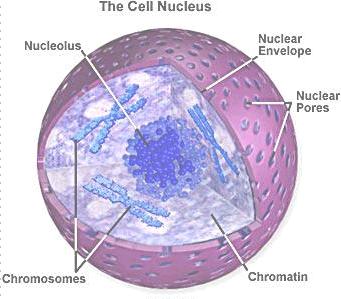
Image found at http://universe-review.ca/I10-04-cellnucleus.jpg
Cells are made of Molecules that are made of joined atoms.
Similar Cells collected together make Tissues
When Tissues that function together for the same purpose form Organs
Multiple Organs working together form an Organ System
Organ Systems are found in complex Organisms
Organisms of the same species living together in an area form a Population
Breaking down Population is done by Communities where people interact
An ecosystem is formed by Communities plus a Physical Environment
Biosphere is formed/created by different regions that are capable of supporting Living Organism.
Life cannot continue of there are not any outside sources or materials.
Energy and Nutrition is usually gained through food.
Different nutrients can breakdown completely to give the organism necessary energy to convert the other nutrients into parts or can produce cells.
Some consider that self directed movement is done by gained energy.
Image found at http://www.mun.ca/biology/scarr/DNA_&_Reproduction.jpg
Reproducing is organisms making copies of themselves to continue their own kind
DNA contains hereditary information that directs the structure of the cell and its Metabolism
Metabolism is all the chemical reactions that take place in the Cell
The presences of Genes(in DNA) allow the cells and organism to replicate
A Gene is a unit of heredity existing as alleles on a chromosomes
DNA is replicated to make exact copies of the Gene
During Reproduction the sperm carries its contributing genes and the egg has its contributing genes that will combine in the new offspring
Genes direct the cell development so the offspring will resemble its parents.
Image found at http://www.ag.ndsu.edu/pubs/plantsci/hay/r648-5.gif
Growth is recognizing an increase in size and usually the number of cells in the organism
Development is all changes that take place the durations of life including from the time of conception.
Development also includes the repair that takes place after injuries.
Homeostasis means to have an internal environment for cells.
All systems of the human body help maintain this environment
Image found at http://www.bioteams.com/images/swarm_behavior.jpg
Living things respond to stimuli usually by moving away or towards the stimulus. This is noticeable reaction, but internals stimuli can be seen as your body reacting on its own.
When blood pressure gets too high, you body tells your blood vessels to dilate to attempt to return it to normal pressure. If you burn your hand in the oven, your body tells your skin to form a blister to try to protect itself.
Image found at http://www.answers.com/topic/recapitulation-theory?cat=health
Evolution is the process by which a species changes through time.
This is what adaptation is a part of.
Living organisms need to change to their surrounding and their particular needs (I.E. Food or Shelter)
All organisms share the same Characteristics of Life because their Ancestry can be traced back to the first cell or cells.
Image found at http://img.timeinc.net/time/daily/2006/0609/monkey_0930.jpg
Introduction
Living things are now classified into three Domains
A Domain is the primary taxonomic group above the kingdom level; all living organisms may be placed in one of the three domains
A Kingdom is one of the categories used to classify organisms; it is also the category above phylum
Domain Eukarya have membrane bounded nucleus; this is the domain humans fall under.
The different levels of this particular domain are Kingdom Animalia, (animals) Kingdom Plantae, (plants) Kingdom Fungi, and Kingdom Protista (protists)
Domain Archaea and Bacteria lack membrane bounded nucleus
Vertebrates have a nerve cord that is protected by a vertebral column, whose vertebrae indicate that we and other vertebrates are segmented animals.
Human beings are most closely related to apes, but humans did not evolve from apes. We evolved from similar apelike ancestor.
The relationship between apes is like your relation to cousins. Only related through grandparents.
Humans Have a Cultural Heritage
Culture covers human activist and product that are passed from one generation to the next that are not in direct biological inheritance.
Previous generations pass on their beliefs, values and skills to the next generation
Humans are Members of the Biosphere
Biosphere is a living network that spans the surface of the Earth into the atmosphere and down in the soul and seas.
Humans Threaten the Biosphere
Humans change existing ecosystems for their own purposes.
Biodiversity is that total number of species, the variability of their genes, and the communities in which they live.
Earth is estimated to be as high as 15 millions species and fewer than 2 million are defined or named.
Extinction is the death of a species or larger group of organisms.
It is estimated that as many as 400 species per day are becoming extinct.
Image found at http://kentsimmons.uwinnipeg.ca/cm1504/Image37.gif
Introduction
Science is a way of knowing about the natural world.
Importance of Scientific Theories in Biology
Scientific-theories are concepts that tell us about the order and the patterns within the natural world, or how life is organized.
Evolution is the unifying concept of biology because it makes sense of what we know about living things.
The Principle of Evolution is a preferred terminology for theories.
The Scientific Method Has Steps
Scientific method is the process of attaining knowledge by making observations, testing hypotheses, and coming to conclusions.
Data is facts pertinent to the matter at hand.
Hypothesis is a guess what could happen with the data though the experiment, it is also the basis for observations and experimentation
Conclusions either support or do not support the hypothesis
How to Do a Controlled Study
Experiment is a series of procedures to test a hypothesis.
Experimental variables
Control group is a sample that goes through all the steps of an experiment but lacks the factor or is not exposed to the factor being tested.
Test group is a group exposed to the experimental variable in an experiment rather than the control group
Placebo is a treatment that is an inactive substance, which is administered as if it were a therapy in an experiment but which has to therapeutic value
Be aware of all information being correct
Graphs are useful tools to summarize data in a clear and simplified manner.
Statistical Data, standard error and statistical significance. Technology is the application of scientific knowledge to the interest of humans.
All citizens should assume their own way decided on technology use.
**All information found in Human Biology by Sylvia S. Mader
Image found at http://web.pdx.edu/~nathanh/benzene/benzene2.gif
Image found at http://www.cfo.doe.gov/me70/manhattan/images/AtomLabeledLarge.gif
And element is one of the basic building blocks of matter.
Elements cannot be broken down by chemical means.
Every element has a name and symbol
An atom is the smallest unit of an element that still retains the chemical and physical properties of the element.
Protons and neutrons are located in the nucleus and electrons orbit around the nucleus.
Atomic numbers tell you how many protons and electrons an atom has when it is electrically neutral.
Mass of an atom represents its quantity of matter.
Atomic Mass for each element allows you to determine the number of neutrons the atoms have
Isotopes of the same type of atom differ in the number of neutrons and therefore the mass.
Radioisotope
Molecules are atoms bonded with one another forming this chemical unit.
A compound is when the atoms are different
Ions are particles that carry either a positive or negative charge.
Ionic Bond is formed by the attraction between oppositely charged sodium ions and chloride ions.
Covalent bonds are where atoms share elections.
These bonds can be in a triple bond form.
Structural formula, H----O----H, O=O
Molecular formula, H20, O2
Image found at http://www.lenntech.com/images/Water%20molecule.jpg
Polar molecule is the oxygen end of the molecule has a slight negative charge and the hydrogen end has a slight positive charge
A hydrogen bond occurs whenever a covalently bonded hydrogen is slightly positive and attracted to a negatively charged atom some distance away
Water is a liquid at room temperature.
The temperature of liquid water rises and falls slowly preventing sudden or drastic changes
Water has a high heat of vaporization keeping the body from overheating
Frozen water is less dense than liquid water so ice floats on water
Water molecules are cohesive and therefore liquids fill vessels such as blood vessels.
Water is a solvent for polar charged molecules and thereby facilitates chemical reactions both outside and within our bodies.
Ions and molecules that interact with water are said to be hydrophilic. Non ionized and nonpolar molecules that do not interact with water are said to be hydrophobic
Acids are substances that dissociate in water releasing hydrogen ions.
Bases are substances that either take up hydrogen ions or release hydroxide ions.
pH scale is used to indicate the acidity and basicity of a solution.
Buffers help prevent pH changes
Organic molecules are in four categories called carbohydrates, lipids, proteins, and nucleic acids.
Organic is not how as food is grown it refers to a molecule that contains carbon and hydrogen and is usually associated with living things.
Macromolecule is a molecule that contains many subunits
Dehydration reaction is use in making a macromolecule
Hydrolysis reaction is what cells use to breakdown macromolecules
Image found at http://www.wannabebig.com/images/cm_chart3a.gif
Carbohydrates functions for quick and short term energy storage in all organisms
Simple carbohydrates involve monosaccharide, glucose, and disaccharide, which all are forms of sugar
Complex Carbohydrates involve macromolecules such as starch, glycogen, and cellulose and they contain many glucose units.
Starch and glycogen are stored forms of glucose usually in plants and animals.
Cellulose is found in plan cell walls. It also passes through the digestive system in the form of fiber
Fiber includes various non digestible carbohydrates from plants. Doubling fiber intake can be protective against heart disease
Image found at http://www.bioteach.ubc.ca/Bio-industry/Inex/
Lipids are a class of organic compounds that tends to be soluble only in non polar solvents meaning they will not dissolve in water. They also contain a large amount of energy
Fats are usually from animals and are solid at room temperature.
Oils are usually part of a plant and are liquid at room temperature. ‘
Fats have various functions in the body including long term energy storage, insulations against heat, and it forms a protective cushion around major organs.
Emulsifiers allow lipids(fat and oils) to mix with water. Emulsification is when the lipids have fully dispersed in the water. Bile is an emulsifier.
Triglyceride is another name for fats.
Fatty acid is a carbon-hydrogen chain that ends with the acidic group.
Most fatty acids contain 16 to 18 carbon atoms per molecule.
Fatty acids are either saturated or unsaturated.
Saturated fatty acids have no double bonds between carbon atoms
Unsaturated fatty acids have double bonds in the carbon chain wherever the number of hydrogen is less than two per carbon
Saturated fats are linked to cardiovascular disease because they cause the lipid material to stick and accumulate in the blood vessels.
Trans Fats are of more concern then saturated.
They are naturally ikn diary products form ruminants. They are industrially produced through partial hydrogenated plants oils and animal fats.
Dietary fats cover the moderation of fat intake in hopes to loose weight.
Phospholipids are constructed like fats, except that in place of the third fatty acid there is a phosphate group or grouping that contains both phosphate and nitrogen. They are also neutral like fats.
Steroids are lipids that have an entirely different structure from fats. They have four carbon rings that are fused and each one differs primarily by the functional groups attached to the rings
Image found at http://matcmadison.edu/biotech/resources/proteins/labManual/images/220_04_113.png
Proteins serve various functions in the body including support ligaments, bring enzymes to speed up chemical reactions, transport molecules like hemoglobin, defend with antibodies, hormones that serve as intercellular messengers for metabolism, and motion
Proteins are macromolecules with amino acid subunits.
Amino acids are organic molecules having an amino group and an acid group, which covalently bonds to produce peptide molecules
Denaturation is the irreversible change in shape when the proteins undergo changes in heat and pH
There are at least three levels of organization that are called primary, secondary, tertiary and some have an additional level called quaternary structure.
Image found at http://www.uq.edu.au/vdu/DNA%20nitrogenous%20bases.gif
There are only two types of nucleic acids which are DNA(deoxyribonucleic acid) and RNA (ribonucleic acid)
The function of DNA is carrying genes and the genes specify the sequence of amino acids in the proteins.
The function of RNA is to convey DNA’s instructions dealing with amino acids and sequence of the proteins.
The bases for DNA are adenine (A), thymine (T), guanine (G), and cytosine (C).
The base of RNA is uracil (U) and it replaces the base thymine
ATP (adenosine triphosphate) is an energy carrier in cells.
The function of ATP is to synthesize macromolecules.
ADP (adenosine diphosphate )
**All information found in Human Biology by Sylvia S. Mader
Image found at http://training.seer.cancer.gov/module_anatomy/images/illu_cell_structure.jpg
Cell theory tells that a cells is the basic unit of life. There is nothing smaller then a cell that is alive.
The volume of a cell represents the needs of the cell. Meaning Large cells require more nutrients and put out more waste
Actively metabolizing cells need to be so small because the cells begin dividing and need plenty of room to fill in.
A light microscope uses a set of glass lenses and light rays passing through the object to magnify objects and they image can be view directly by the human eye.
An electron microscope can either be a transmitted or scanning. Transmitted microscopes have a better ability to distinguish between two adjacent points. The human eye cannot see these images and is projected on a florescent screen or film.
Scanning electron microscope allows you to view the image on a screen or film in a three dimensional view of the object.
Image found at http://content.answers.com/main/content/img/McGrawHill/Encyclopedia/images/CE116900FG0010.gif
The three main parts of a eukaryotic cell are a nucleus, plasma membrane and cytoplasm.
Plasma membrane and cytoplasm also occur in a prokaryotic cell, but it does not contain the nucleus.
It is believed that the eukaryotic cells evolved. The nucleus could have formed by an invagination of the plasma membrane. During the invagination the plasma membrane may have produced the endomembrane system. Organelles in the eukaryotic cell may have came about by taking over prokaryotic cells.
Image found at http://www.okc.cc.ok.us/biologylabs/Images/Cells_Membranes/plasmamembrane2.jpg
The structure of the plasma membrane
The function of the plasma membran
Image found at http://universe-review.ca/I10-04-cellnucleus.jpg
Self/Unit Evaluation for Unit 1
I definitely found this unit to be a big challenge, but I do feel I have learn a great deal from all the exercises and readings.
Three things that I am proud of was my cell, my topic 1 compendium review, and the online labs. I really enjoyed the online experience of the microscope!
My ethical issue essay and my topic 2 compendium review could have used some improvement. I spent hours on my topic 1 reviews, but once I hit topic 2 I was almost burning myself out.
Overall I think my grade should be about a C. I tried to put forward as much effort for the things happening at this time, no excuses but I will try much harder next unit.
I loved being able to actually make the cell to understand that various parts of it. I think that this had to be my most engaging point so far. Topic 2 of the compendium reviews was my distanced point of the unit. I had put in a lot of effort into topic 1 that I just felt burnt out on the second part. I need to improve the fact of picking important topics to include in these reviews.
What was the greatest surprise of this unit was learning about cancer more in depth. I have heard so many things from my family about cancer, but learning the scientific side of it was wonderful.
Three things that I am proud of was my cell, my topic 1 compendium review, and the online labs. I really enjoyed the online experience of the microscope!
My ethical issue essay and my topic 2 compendium review could have used some improvement. I spent hours on my topic 1 reviews, but once I hit topic 2 I was almost burning myself out.
Overall I think my grade should be about a C. I tried to put forward as much effort for the things happening at this time, no excuses but I will try much harder next unit.
I loved being able to actually make the cell to understand that various parts of it. I think that this had to be my most engaging point so far. Topic 2 of the compendium reviews was my distanced point of the unit. I had put in a lot of effort into topic 1 that I just felt burnt out on the second part. I need to improve the fact of picking important topics to include in these reviews.
What was the greatest surprise of this unit was learning about cancer more in depth. I have heard so many things from my family about cancer, but learning the scientific side of it was wonderful.
Ethical Essay for Unit 1

Genetic Engineering can be used for various things in the science field like trying to repair genetic defects or to make part of it better, but a well known part of Genetic engineering is Stem Cell Research. The issue with it varies depending upon the person though. With all of the new health risks that are sky rocketing there are many people turning to science with hopes of cures or answers. On the different levels there are people who would do anything for a cure and others that would never go against the way our world (and body) is made.
People who are against Genetic Engineering have different reasons involving the chance of Biowarfare, tampering with “God’s” work, (like stem cell research or cloning) or just against change of our blueprints period. There are average people from various religious beliefs, doctors and scientists. There are many people who strongly appose ever aspect of genetic engineering and others that just may not agree with the animal testing. Genetic Engineering covers things like splicing the genes of various plants to improve the size and grow rate of one plant. It also can be used to make disease resistant crops, but it makes people wonder how same all this change is for something that could in turn go in our bodies.
On the other hand there are people who are completely for Genetic Engineering and can see many benefits for what this science has to offer. These people assume that these advancements will make our lives easier, better, and closer to be being healthy. There are people who believe that stem cell research will one day be able to find cures for cancers and help people with serious health conditions. Stem cell research is transforming embryonic cells into other cells for different purposes. These cells could hypothetically help muscles and nerves when put into the body by replacing the older cells and then dividing throughout the area. When you are at a point in your life with many health risks going against you, this type of treatment can be very welcome in your body.
Although there is not a defined “good” or “bad” side of stem cell research, there are definitely many people on both sides. Stem cells have potential for many things in the medical field, but some question on whether or not it is ethically correct by religious or personal beliefs. I do see there being many more debates in the future, and I don’t think that there will be much wide spread acceptance of stem cell research for many years.
Although there is not a defined “good” or “bad” side of stem cell research, there are definitely many people on both sides. Stem cells have potential for many things in the medical field, but some question on whether or not it is ethically correct by religious or personal beliefs. I do see there being many more debates in the future, and I don’t think that there will be much wide spread acceptance of stem cell research for many years.
Lab Unit 1
 This is a chocolate diagram of DNA replicating
  This is the chocolate model of tRNA
This is a model of a working cell made from a cake and chocolate. Besides the cake and colored frosting, each part of the cell is created with different chocolate in different colors. I wasn’t able to fit all parts of it into the cake, but what is included in the cake is its cell membrane, Endoplasmic reticulum, both rough and smooth ER, a nucleus, nucleolus, mitochondrion, Golgi apparatus, vesicles, lysosomes.
The cell membrane is the layer surrounding the cytoplasm and regulates what enters and exits the cell.
Endoplasmic reticulum is a system of saccules and channels in the cytoplasm.
The Nucleus is an organelle that has chromosomes and controls the structure and function of the cell.
The nucleolus produces ribosomal subunits.
Mitochondrion is membrane bound organelle in which ATP molecules are produced during the process of cellular respiration.
Golgi apparatus is also an organelle with saccules and vesicles that process, package and distribute molecules for the cell.
Vesicles are small membrane bound sacs that are substances with in the cell.
Lysosomes are vesicles that contain hydrolytic enzymes for digesting macromolecules.

It got a little mixed up, this is the second picture. I had finished some of the chocolates, only the cell membrane frosting was done. :)

Here is the start of the cell. A pretty simple little cake! :)
 The finished product!
The cell membrane is the layer surrounding the cytoplasm and regulates what enters and exits the cell.
Endoplasmic reticulum is a system of saccules and channels in the cytoplasm.
The Nucleus is an organelle that has chromosomes and controls the structure and function of the cell.
The nucleolus produces ribosomal subunits.
Mitochondrion is membrane bound organelle in which ATP molecules are produced during the process of cellular respiration.
Golgi apparatus is also an organelle with saccules and vesicles that process, package and distribute molecules for the cell.
Vesicles are small membrane bound sacs that are substances with in the cell.
Lysosomes are vesicles that contain hydrolytic enzymes for digesting macromolecules.

It got a little mixed up, this is the second picture. I had finished some of the chocolates, only the cell membrane frosting was done. :)

Here is the start of the cell. A pretty simple little cake! :)
 The finished product!
I did find this to be slightly difficult, but I love baking and was happy to play around with making the various parts out of chocolate. Unforutnately no one can enjoy eating it because I was sick when I made it.
Sunday, February 17, 2008
Online Microscope Lab
 Even though I found it to be slightly confusing when I was starting out, I ended up really enjoying this lab.
The various parts of the microscope that we learned about were:
Stage - The flat platform where you place your slides. Stage clips hold the slides in place. It is better to adjust this while looking at the microscope not the oculars.
Focus - There are two separate knobs for the focus, course and fine. Course moves the stage up and down quickly. Fine is also moving the stage but allows it to move slowly to fine tune the focus. Best adjusted when looking through the oculars
knobs - Aside from the focus knobs, there are two other knobs used for moving the slide on the stage. One of them moves the slide up and down, they other moves it side to side. Can be adjusted either way, but better while looking through the eye pieces.
Iris - Controls the angle of the light coming in under the stage and slide. Can be adjusted both ways, but better to be done before looking through the eye pieces.
Oculars - Another name for the eye pieces that you look through to see the slide magnified. Adjusted when you are getting ready to look into them.
Objective Lens - The four lenses that change the magnification. Our microscope had 4x, 10x, 40x, 100x. Better to change when looking through the oculars.
Sunday, January 27, 2008

My name is Lacey,
My favorite artist (painter) is Jack Vettriano, he is an idol of mine.
I am currently taking Human Biology for my personal interest more then anything. Luckily it can be used towards my AA also! I have always had such a strong interest in the human body and the way it works and I am excited to further my understanding of it.
Throughout this class I hope to gain as much information as possible about the human body. Although I have done my own research on bone structures, muscles and nerves I do feel that I need to gain a better understanding.
A few interesting things about me is I am an aspiring Photographer.
I have been lucky enough to become friends with a Raccoon and an opossum!
I work with preschoolers, I have been for almost 2 years and it is always a new experience everyday!
Subscribe to:
Comments (Atom)