Image found at http://www.chesterfield.k12.sc.us/Cheraw%20Intermediate/DaveEvans/BiologyICP/Notes--LevelsOfOrganization.jpg
Cells are made of Molecules that are made of joined atoms.
Similar Cells collected together make Tissues
When Tissues that function together for the same purpose form Organs
Multiple Organs working together form an Organ System
Organ Systems are found in complex Organisms
Organisms of the same species living together in an area form a Population
Breaking down Population is done by Communities where people interact
An ecosystem is formed by Communities plus a Physical Environment
Biosphere is formed/created by different regions that are capable of supporting Living Organism.
Life cannot continue of there are not any outside sources or materials.
Energy and Nutrition is usually gained through food.
Different nutrients can breakdown completely to give the organism necessary energy to convert the other nutrients into parts or can produce cells.
Some consider that self directed movement is done by gained energy.
Image found at http://www.mun.ca/biology/scarr/DNA_&_Reproduction.jpg
Reproducing is organisms making copies of themselves to continue their own kind
DNA contains hereditary information that directs the structure of the cell and its Metabolism
Metabolism is all the chemical reactions that take place in the Cell
The presences of Genes(in DNA) allow the cells and organism to replicate
A Gene is a unit of heredity existing as alleles on a chromosomes
DNA is replicated to make exact copies of the Gene
During Reproduction the sperm carries its contributing genes and the egg has its contributing genes that will combine in the new offspring
Genes direct the cell development so the offspring will resemble its parents.
Image found at http://www.ag.ndsu.edu/pubs/plantsci/hay/r648-5.gif
Growth is recognizing an increase in size and usually the number of cells in the organism
Development is all changes that take place the durations of life including from the time of conception.
Development also includes the repair that takes place after injuries.
Homeostasis means to have an internal environment for cells.
All systems of the human body help maintain this environment
Image found at http://www.bioteams.com/images/swarm_behavior.jpg
Living things respond to stimuli usually by moving away or towards the stimulus. This is noticeable reaction, but internals stimuli can be seen as your body reacting on its own.
When blood pressure gets too high, you body tells your blood vessels to dilate to attempt to return it to normal pressure. If you burn your hand in the oven, your body tells your skin to form a blister to try to protect itself.
Image found at http://www.answers.com/topic/recapitulation-theory?cat=health
Evolution is the process by which a species changes through time.
This is what adaptation is a part of.
Living organisms need to change to their surrounding and their particular needs (I.E. Food or Shelter)
All organisms share the same Characteristics of Life because their Ancestry can be traced back to the first cell or cells.
Image found at http://img.timeinc.net/time/daily/2006/0609/monkey_0930.jpg
Introduction
Living things are now classified into three Domains
A Domain is the primary taxonomic group above the kingdom level; all living organisms may be placed in one of the three domains
A Kingdom is one of the categories used to classify organisms; it is also the category above phylum
Domain Eukarya have membrane bounded nucleus; this is the domain humans fall under.
The different levels of this particular domain are Kingdom Animalia, (animals) Kingdom Plantae, (plants) Kingdom Fungi, and Kingdom Protista (protists)
Domain Archaea and Bacteria lack membrane bounded nucleus
Vertebrates have a nerve cord that is protected by a vertebral column, whose vertebrae indicate that we and other vertebrates are segmented animals.
Human beings are most closely related to apes, but humans did not evolve from apes. We evolved from similar apelike ancestor.
The relationship between apes is like your relation to cousins. Only related through grandparents.
Humans Have a Cultural Heritage
Culture covers human activist and product that are passed from one generation to the next that are not in direct biological inheritance.
Previous generations pass on their beliefs, values and skills to the next generation
Humans are Members of the Biosphere
Biosphere is a living network that spans the surface of the Earth into the atmosphere and down in the soul and seas.
Humans Threaten the Biosphere
Humans change existing ecosystems for their own purposes.
Biodiversity is that total number of species, the variability of their genes, and the communities in which they live.
Earth is estimated to be as high as 15 millions species and fewer than 2 million are defined or named.
Extinction is the death of a species or larger group of organisms.
It is estimated that as many as 400 species per day are becoming extinct.
Image found at http://kentsimmons.uwinnipeg.ca/cm1504/Image37.gif
Introduction
Science is a way of knowing about the natural world.
Importance of Scientific Theories in Biology
Scientific-theories are concepts that tell us about the order and the patterns within the natural world, or how life is organized.
Evolution is the unifying concept of biology because it makes sense of what we know about living things.
The Principle of Evolution is a preferred terminology for theories.
The Scientific Method Has Steps
Scientific method is the process of attaining knowledge by making observations, testing hypotheses, and coming to conclusions.
Data is facts pertinent to the matter at hand.
Hypothesis is a guess what could happen with the data though the experiment, it is also the basis for observations and experimentation
Conclusions either support or do not support the hypothesis
How to Do a Controlled Study
Experiment is a series of procedures to test a hypothesis.
Experimental variables
Control group is a sample that goes through all the steps of an experiment but lacks the factor or is not exposed to the factor being tested.
Test group is a group exposed to the experimental variable in an experiment rather than the control group
Placebo is a treatment that is an inactive substance, which is administered as if it were a therapy in an experiment but which has to therapeutic value
Be aware of all information being correct
Graphs are useful tools to summarize data in a clear and simplified manner.
Statistical Data, standard error and statistical significance. Technology is the application of scientific knowledge to the interest of humans.
All citizens should assume their own way decided on technology use.
**All information found in Human Biology by Sylvia S. Mader
Image found at http://web.pdx.edu/~nathanh/benzene/benzene2.gif
Image found at http://www.cfo.doe.gov/me70/manhattan/images/AtomLabeledLarge.gif
And element is one of the basic building blocks of matter.
Elements cannot be broken down by chemical means.
Every element has a name and symbol
An atom is the smallest unit of an element that still retains the chemical and physical properties of the element.
Protons and neutrons are located in the nucleus and electrons orbit around the nucleus.
Atomic numbers tell you how many protons and electrons an atom has when it is electrically neutral.
Mass of an atom represents its quantity of matter.
Atomic Mass for each element allows you to determine the number of neutrons the atoms have
Isotopes of the same type of atom differ in the number of neutrons and therefore the mass.
Radioisotope
Molecules are atoms bonded with one another forming this chemical unit.
A compound is when the atoms are different
Ions are particles that carry either a positive or negative charge.
Ionic Bond is formed by the attraction between oppositely charged sodium ions and chloride ions.
Covalent bonds are where atoms share elections.
These bonds can be in a triple bond form.
Structural formula, H----O----H, O=O
Molecular formula, H20, O2
Image found at http://www.lenntech.com/images/Water%20molecule.jpg
Polar molecule is the oxygen end of the molecule has a slight negative charge and the hydrogen end has a slight positive charge
A hydrogen bond occurs whenever a covalently bonded hydrogen is slightly positive and attracted to a negatively charged atom some distance away
Water is a liquid at room temperature.
The temperature of liquid water rises and falls slowly preventing sudden or drastic changes
Water has a high heat of vaporization keeping the body from overheating
Frozen water is less dense than liquid water so ice floats on water
Water molecules are cohesive and therefore liquids fill vessels such as blood vessels.
Water is a solvent for polar charged molecules and thereby facilitates chemical reactions both outside and within our bodies.
Ions and molecules that interact with water are said to be hydrophilic. Non ionized and nonpolar molecules that do not interact with water are said to be hydrophobic
Acids are substances that dissociate in water releasing hydrogen ions.
Bases are substances that either take up hydrogen ions or release hydroxide ions.
pH scale is used to indicate the acidity and basicity of a solution.
Buffers help prevent pH changes
Organic molecules are in four categories called carbohydrates, lipids, proteins, and nucleic acids.
Organic is not how as food is grown it refers to a molecule that contains carbon and hydrogen and is usually associated with living things.
Macromolecule is a molecule that contains many subunits
Dehydration reaction is use in making a macromolecule
Hydrolysis reaction is what cells use to breakdown macromolecules
Image found at http://www.wannabebig.com/images/cm_chart3a.gif
Carbohydrates functions for quick and short term energy storage in all organisms
Simple carbohydrates involve monosaccharide, glucose, and disaccharide, which all are forms of sugar
Complex Carbohydrates involve macromolecules such as starch, glycogen, and cellulose and they contain many glucose units.
Starch and glycogen are stored forms of glucose usually in plants and animals.
Cellulose is found in plan cell walls. It also passes through the digestive system in the form of fiber
Fiber includes various non digestible carbohydrates from plants. Doubling fiber intake can be protective against heart disease
Image found at http://www.bioteach.ubc.ca/Bio-industry/Inex/
Lipids are a class of organic compounds that tends to be soluble only in non polar solvents meaning they will not dissolve in water. They also contain a large amount of energy
Fats are usually from animals and are solid at room temperature.
Oils are usually part of a plant and are liquid at room temperature. ‘
Fats have various functions in the body including long term energy storage, insulations against heat, and it forms a protective cushion around major organs.
Emulsifiers allow lipids(fat and oils) to mix with water. Emulsification is when the lipids have fully dispersed in the water. Bile is an emulsifier.
Triglyceride is another name for fats.
Fatty acid is a carbon-hydrogen chain that ends with the acidic group.
Most fatty acids contain 16 to 18 carbon atoms per molecule.
Fatty acids are either saturated or unsaturated.
Saturated fatty acids have no double bonds between carbon atoms
Unsaturated fatty acids have double bonds in the carbon chain wherever the number of hydrogen is less than two per carbon
Saturated fats are linked to cardiovascular disease because they cause the lipid material to stick and accumulate in the blood vessels.
Trans Fats are of more concern then saturated.
They are naturally ikn diary products form ruminants. They are industrially produced through partial hydrogenated plants oils and animal fats.
Dietary fats cover the moderation of fat intake in hopes to loose weight.
Phospholipids are constructed like fats, except that in place of the third fatty acid there is a phosphate group or grouping that contains both phosphate and nitrogen. They are also neutral like fats.
Steroids are lipids that have an entirely different structure from fats. They have four carbon rings that are fused and each one differs primarily by the functional groups attached to the rings
Image found at http://matcmadison.edu/biotech/resources/proteins/labManual/images/220_04_113.png
Proteins serve various functions in the body including support ligaments, bring enzymes to speed up chemical reactions, transport molecules like hemoglobin, defend with antibodies, hormones that serve as intercellular messengers for metabolism, and motion
Proteins are macromolecules with amino acid subunits.
Amino acids are organic molecules having an amino group and an acid group, which covalently bonds to produce peptide molecules
Denaturation is the irreversible change in shape when the proteins undergo changes in heat and pH
There are at least three levels of organization that are called primary, secondary, tertiary and some have an additional level called quaternary structure.
Image found at http://www.uq.edu.au/vdu/DNA%20nitrogenous%20bases.gif
There are only two types of nucleic acids which are DNA(deoxyribonucleic acid) and RNA (ribonucleic acid)
The function of DNA is carrying genes and the genes specify the sequence of amino acids in the proteins.
The function of RNA is to convey DNA’s instructions dealing with amino acids and sequence of the proteins.
The bases for DNA are adenine (A), thymine (T), guanine (G), and cytosine (C).
The base of RNA is uracil (U) and it replaces the base thymine
ATP (adenosine triphosphate) is an energy carrier in cells.
The function of ATP is to synthesize macromolecules.
ADP (adenosine diphosphate )
**All information found in Human Biology by Sylvia S. Mader
Image found at http://training.seer.cancer.gov/module_anatomy/images/illu_cell_structure.jpg
Cell theory tells that a cells is the basic unit of life. There is nothing smaller then a cell that is alive.
The volume of a cell represents the needs of the cell. Meaning Large cells require more nutrients and put out more waste
Actively metabolizing cells need to be so small because the cells begin dividing and need plenty of room to fill in.
A light microscope uses a set of glass lenses and light rays passing through the object to magnify objects and they image can be view directly by the human eye.
An electron microscope can either be a transmitted or scanning. Transmitted microscopes have a better ability to distinguish between two adjacent points. The human eye cannot see these images and is projected on a florescent screen or film.
Scanning electron microscope allows you to view the image on a screen or film in a three dimensional view of the object.
Image found at http://content.answers.com/main/content/img/McGrawHill/Encyclopedia/images/CE116900FG0010.gif
The three main parts of a eukaryotic cell are a nucleus, plasma membrane and cytoplasm.
Plasma membrane and cytoplasm also occur in a prokaryotic cell, but it does not contain the nucleus.
It is believed that the eukaryotic cells evolved. The nucleus could have formed by an invagination of the plasma membrane. During the invagination the plasma membrane may have produced the endomembrane system. Organelles in the eukaryotic cell may have came about by taking over prokaryotic cells.
Image found at http://www.okc.cc.ok.us/biologylabs/Images/Cells_Membranes/plasmamembrane2.jpg
The structure of the plasma membrane
The function of the plasma membran
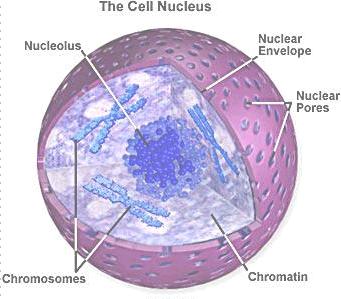
Image found at http://universe-review.ca/I10-04-cellnucleus.jpg

Subscribe to:
Post Comments (Atom)


1 comment:
Thanks for the information here i like the Biology that is i like microscopes at truevision microscopes, i want to know their biology microscopes products, and i believed their products is really great!
Post a Comment